










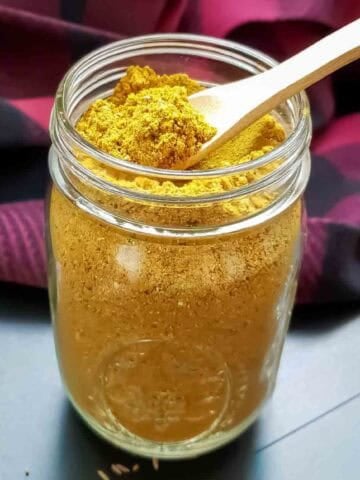
If you've ever wondered what gives Indian curries, lentils, and vegetable dishes their signature warm, aromatic flavor, the answer is often garam masala. This traditional Indian spice mix is easy to make at home using whole spices, and once you taste the fresh version, you'll never want to go back to store-bought. I am sharing my mom's traditional and treasured recipe of how to make home-made garam masala.

This homemade garam masala recipe comes together in about 10 minutes and delivers a bold, fragrant blend that's perfect for curries, soups, rice dishes, roasted vegetables, and marinades. Making your own also allows you to customize the flavor exactly to your liking while avoiding fillers and preservatives.
Whether you're cooking Chana Masala, Dal Tadka, Vegetable Curry, Shahi Paneer, or other Indian Curry recipes, this spice blend deserves a permanent place in your pantry.
What is Garam Masala?
Garam Masala literally translates to "warming spices." Interestingly, the name doesn't mean the blend is spicy hot. Instead, according to Ayurveda, these spices create warmth within the body and help support digestion.
Every region of India has its own variation. North Indian garam masala often includes cinnamon, cloves, cardamom, cumin, coriander, peppercorns, and nutmeg. Southern versions may include curry leaves, fennel seeds, or star anise.
There isn't one "correct" recipe. Every family develops its own signature blend over generations.
Ingredients
There’s no single recipe for Garam Masala. The blend varies from region to region, and even from household to household. It truly reflects the diverse culinary traditions of India.
I am sharing my heirloom recipe with easy to find herbs and spices. Exact measurements are listed in the recipe card.
- Coriander Seeds: Adds a citrusy, slightly sweet flavor.
- Cumin Seeds: Earthy and nutty, cumin is a cornerstone of many spice blends.
- Cardamom: Offers a sweet, floral fragrance with a hint of citrus. I use both green cardamom and black cardamom.
- Cloves: These tiny buds pack a punch with their strong, sweet, and slightly bitter flavor.
- Black Peppercorns: Adds a sharp, spicy heat.
- Cinnamon: Sweet and woody, cinnamon gives warmth to the mix.
- Bay Leaves: Imparts a subtle bitterness and a touch of pungency.
- Mace: The outer covering of the nutmeg seed, adding a similar but more delicate flavor. ( optional. Use pinch of nutmeg as an alternative)
How to Make Homemade Garam Masala
The process of making this recipe begins with dry-roasting the whole spices over medium heat until they release their essential oils and become fragrant. This step is crucial as it enhances the flavor of the spices.
After roasting, let them cool completely. Grind the spice mix into a fine powder using a spice grinder or a traditional mortar and pestle.
For a more rustic texture, you can coarsely grind the spices. Store the freshly ground spice in an airtight container to preserve its aroma and potency.
How to use Garam Masala
Garam Masala is incredibly versatile. Use it to elevate everyday dishes. Besides just using in Indian dishes including curries and dals, I love to sprinkle it to enhance savory flavors of salad, buddha bowls and grilled and roasted vegetables.
Marinades: I love using it as a marinade for meat, poultry, or fish, along with yogurt, ginger, and garlic, to infuse the food with its rich flavor.
Soups and Stews: A pinch of Garam Masala can elevate the flavor of soups, stews, and even Western-style dishes like roasted vegetables or braised meats.
Rice Dishes: Biryani and pulao, two beloved Indian rice dishes, often include Garam Masala in their spice mix for that signature taste.
I also use homemade masala as a hostess gift. Pack it in cute glass jars, put beautiful label on , wrap a colorful ribbon and gift away. Everyone loves it.

How to Store
Storing Garam Masala properly is crucial to maintaining its freshness, flavor, and potency. Here are some tips to help you store this aromatic spice blend effectively:
Air Tight Container : Store Garam Masala in an airtight container, preferably made of glass or metal. These materials do not absorb odors and are less likely to interact with the spices.
Away from Heat: Store the container in a cool, dry place away from direct sunlight, heat, or humidity. Excess heat can cause the oils in the spices to deteriorate, leading to a loss of flavor and aroma.
For Longer Storage: If you live in a particularly hot or humid climate, you can store it in the refrigerator or freezer. However, this is not usually necessary and can sometimes cause the spices to lose their aroma more quickly due to condensation.
💡Pro Tip : Freshly Grind: Since we are making Garam Masala from whole spices, consider storing the whole spices separately and grinding them in small batches as needed. Whole spices retain their flavor longer than ground ones.
Make it your own
One of the best things about this recipe is how easily it can be tailored to your taste preferences. Experimenting with different proportions allows you to create a spice blend that’s uniquely yours.
If you prefer a spicier taste, you can increase the amount of black pepper or add a few dried chilies. For a sweeter mix, you might add extra cinnamon or a touch of nutmeg.
What is the difference between Garam Masala and Curry powder?
Garam Masala is a traditional Indian spice blend, while curry powder is a Western adaptation inspired by Indian flavors. Garam Masala has a warm, aromatic flavor, used to enhance dishes, while curry powder has a milder, earthy taste with a prominent yellow color from turmeric. Although ingredients tend to be often same, curry powder often has turmeric powder mixed in while garam masala doesn't.
Indian Recipes that Use Garam Masala
- Rajma Masala
- Aloo Palak
- Paneer Makhani
- Aloo Matar - Potato and Peas Curry
- Mushroom masala recipe
- Dum Aloo

❤ If you make this ProfusionCurry Recipe, do let us know how you like it by ⭐⭐⭐⭐⭐Star Rating and commenting below ! ❤
📖 Recipe

Homemade Garam Masala Recipe
Ingredients
- ¼ Cup cumin seeds (Jeera)
- ¼ cup coriander seeds (Dhane)
- 2 cinnamon sticks (Dalchini ) each about 1 inche long
- 2 bay leaf ( Tej Patta )
- 1 Tablespoon Whole Black Peppercorns
- 4 Black Cardamom Moti Elaichi
- 8 Green Cardamom Elaichi
- 1 teaspoon Cloves Laung
- 1 Tablespoon Mace Jaiphal or ¼ teaspoon Nutmeg
Instructions
- Heat a small skillet over medium heat. Once the skillet is hot, add all the whole spices to it. Dry-roast whole spices, until fragrant. Make sure to keep the heat to lowest setting. ( to avoid burn) Dry roasting helps release the fragrant oils from the spices and revive their aroma.
- Turn off the heat and transfer the dry roasted ingredients to a bowl to cool.
- Once the spices are completely cooled, transfer them to a spice blender /coffee grinder. You can also use mortal and pestle if you wish. Blend to the desired texture.
- Store in an airtight container in a cool dry place.
Notes
Nutrition
❤️❤️ Follow us on Pinterest , Instagram and Facebook ! We love creating delicious family favorite recipes from around the world. Come Join Us ! ❤️❤️
Variations
Punjabi Garam Masala
Increase black pepper, cloves, and black cardamom for a stronger blend.
Maharashtrian Version
Add stone flower (dagad phool), dried coconut, sesame seeds, and more cinnamon.
Mild Garam Masala
Reduce cloves and pepper while increasing coriander.
Restaurant Style
Add a little mace and extra green cardamom for richer aroma.
Common Mistakes to Avoid
Over-roasting
Burnt spices become bitter and overpower the blend.
Grinding Warm Spices
Warm spices release moisture, causing clumping.
Using Old Whole Spices
Fresh whole spices produce dramatically better flavor.
Making Too Much
Prepare smaller batches every few months for peak freshness.
Frequently Asked Questions
What does garam masala taste like?
It has warm, earthy, aromatic flavors with hints of sweetness from cinnamon and cardamom, balanced by pepper and cloves.
Is garam masala spicy?
Not usually. It is aromatic rather than hot. Black pepper provides gentle warmth but not intense heat.
Can I skip roasting the spices?
Yes, but roasting significantly enhances the aroma and depth of flavor.
Can I make garam masala without coriander?
You can, although coriander seeds provide structure and balance to the blend. Omitting them changes the flavor considerably.
Is curry powder the same as garam masala?
No. Curry powder often contains turmeric and has a very different flavor profile. Garam masala is warmer, sweeter, and usually added toward the end of cooking.

Timothy V
Fresh masala added great taste to the Indian food. I plan on making it in bulk and gifting.